The Science of Plastic
Where Microplastics End Up in Your Body: What the Evidence Shows
Microplastics have been detected in human blood, placenta, and breastmilk. Here's what a 2023 review found about how they get in and what they may do.
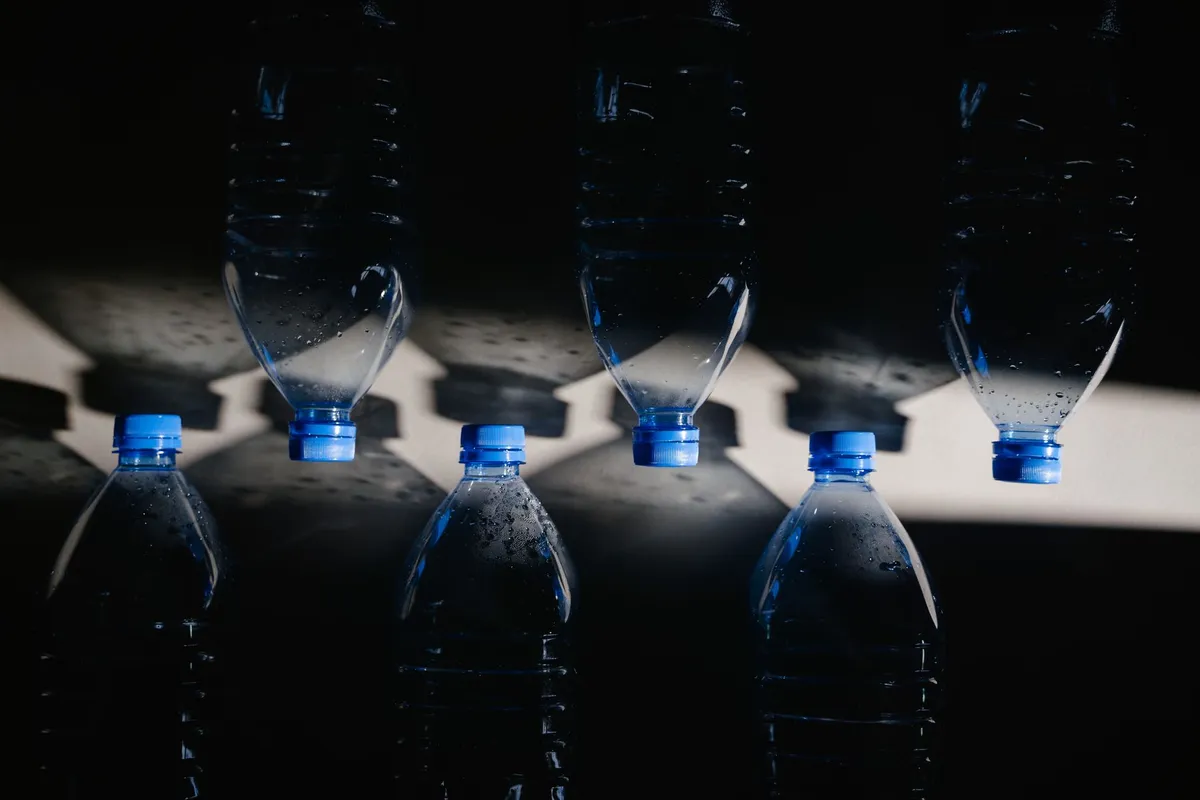
Microplastics have been detected in human blood, in the placenta, and in breastmilk. That is not a projection or a model — it is what researchers have physically recovered from human samples, and it is the starting point of a 2023 review in Environment & Health.[Environment & Health, 2023]
The same review makes a second point just as clearly: we do not yet know what all of this means for human health. Nearly every finding about harm comes from cells, animals, and lab-grown tissue — not from people. Holding both facts at once is the honest way to read the current science.
This piece walks through what that review actually established: how microplastics reach us, where they have been found in the body, and what the toxicity evidence does and does not support.
What microplastics are, and how many there are
Microplastics are plastic fragments and particles with a diameter of less than 5 mm; when they fall below 1 μm, they are called nanoplastics. In practice they range from a few microns to a few millimeters and come in many shapes — a heterogeneous mixture rather than a single uniform material.[Environment & Health, 2023]
The scale of the source material is the context for everything else. In 2019 the global annual output of plastic products reached 460 million tons, of which only about 9% was recycled, with output projected to reach 1.2 billion tons by 2060.[Environment & Health, 2023]
9%
of plastic produced in 2019 was recycled
High production combined with low recovery means a large amount of plastic ends up in the environment, where it breaks down. Microplastics have now been detected from Antarctica to the Arctic, up to the peak of Mount Everest, and down to the Mariana Trench.[Environment & Health, 2023]
How microplastics reach the human body
The review identifies three common exposure routes: oral intake, inhalation, and skin contact — with oral intake as the main one. In reality, people are often exposed through several routes at the same time.[Environment & Health, 2023]
Oral intake. Microplastics have been found in everyday consumables: drinking water, bottled water, seafood, salt, sugar, tea bags, and milk. The review cites estimates that human intake of plastic particles from food runs to roughly 39,000–52,000 particles per person per year, and that when inhalation is included, annual consumption estimates range from about 74,000 to 121,000 particles.[Environment & Health, 2023]
74,000–121,000
estimated microplastic particles consumed per person per year (oral + inhalation)
Take-out containers made from common polymers (PP, PS, PE, PET) are one contributor: people who order take-out four to seven times a week may ingest an estimated 12–203 pieces of microplastics from the containers.[Environment & Health, 2023]
Inhalation. Airborne microplastics are mainly PE, PS, and PET particles and fibers. In outdoor air in Paris, the review cites a median of 5.4 fibers per cubic meter, versus 0.9 fibers per cubic meter indoors. Notably, microplastics have been detected directly in human lung tissue, with the particles found being smaller than those measured in the surrounding atmosphere.[Environment & Health, 2023]
Skin contact. Microplastics are generally not thought to cross the skin barrier, but they can still raise exposure risk by depositing on the skin — for example through products like face cream and facial cleanser. The review also notes that during dermal exposure, certain plastic additives may be absorbed.[Environment & Health, 2023]
Where they’ve been found inside the body
This is the part that has shifted the conversation. It was once assumed that ingested microplastics simply pass through and are excreted. But researchers have detected microplastics in human blood, prompting a reassessment.[Environment & Health, 2023]
The review cites a separate analysis reporting that microplastics are transported through blood circulation and have been found in 15 human biological components — including the spleen, liver, colon, lung, feces, placenta, and breastmilk. Among sampled organs, the colon (28.1 particles/g) and liver (4.6 particles/g) showed the highest content.[Environment & Health, 2023]
Key takeaway
Detection is not the same as harm. Finding a particle in a tissue tells you exposure reached that tissue — it does not, on its own, establish that the particle caused damage there. The review is careful about this distinction throughout.
Pregnant women and infants stand out as sensitive groups. The review notes that PET concentrations in infant feces were reported at roughly ten times the levels found in adults, suggesting infant exposure may be substantially higher. Microplastic fragments have also been detected in human placenta and breastmilk across multiple studies.[Environment & Health, 2023]
What the toxicity research actually shows — and its limits
Here the review is unusually candid, and it’s worth taking that candor seriously. The toxic effects it summarizes — oxidative stress, DNA damage, organ dysfunction, metabolic disorder, immune response, neurotoxicity, and reproductive and developmental toxicity — were observed in experimental models: cells, human organoids, and animals.[Environment & Health, 2023]
In cell studies, microplastics have been associated with oxidative stress and membrane damage, with effects varying by cell type, particle size, dose, charge, and exposure time. In lab-grown human organoids (airway, intestinal, liver, and forebrain), exposure produced functional disruption. In animals, studies reported intestinal damage, disrupted metabolism, inflammatory responses, inhibited acetylcholinesterase activity, and reduced germ-cell quality.[Environment & Health, 2023]
Toxicity also depends heavily on the particle itself: size, shape, surface charge, and weathering all matter. Smaller particles are more likely to enter cells, and irregular fragments can cause more physical harm than spheres. Microplastics can also act as carriers, adsorbing other pollutants such as heavy metals and hydrophobic organic chemicals and potentially enhancing their toxicity.[Environment & Health, 2023]
Caution
A recurring limitation the review flags: most experiments use high exposure doses and rely on commercially made PS and PE particles — a narrow, uniform set compared with the weathered, mixed microplastics found in the real environment. The authors call for studies at realistic environmental concentrations using actual environmental samples.
The honest counterpoint: what we still don’t know
If a headline tells you microplastics are “proven” to cause a specific human disease, it is running ahead of this review. The authors state directly that almost all toxicity studies use experimental models and that the harm to the human body is still unclear.[Environment & Health, 2023]
Epidemiological evidence — the kind that links exposure to outcomes in actual populations — is described as relatively sparse. The review does cite suggestive correlations: higher fecal microplastic concentrations in inflammatory bowel disease patients, microplastics in cirrhotic liver tissue at higher levels than in healthy liver, and detection in human thrombus samples. But these are associations that “may be” related to disease, not established cause-and-effect.[Environment & Health, 2023]
The review also identifies a hard technical constraint: commonly used analytical methods can detect microplastics only down to the micron level, making the smallest particles — nanoplastics, which may carry the greatest potential harm — difficult to measure at all. Some environmental abundance figures may be underestimates as a result.[Environment & Health, 2023]
What a reasonable person should take from this
The defensible reading of this review is neither panic nor dismissal.
Exposure is real and well documented — microplastics are in food, water, air, and human tissue. That much is not in dispute. The health consequences are still being worked out, largely in models rather than in people, and the science is transparent about that gap.
Reducing avoidable oral exposure is a low-regret step given what the review documents: take-out containers, bottled water, and steam-sterilized plastic feeding items all appear as identified sources.[Environment & Health, 2023] None of that requires believing the worst-case scenario. It requires only taking documented exposure routes seriously while the harm question is resolved — and treating confident claims in either direction with skepticism until the epidemiological and clinical data catch up.
Sources
- Environment & Health, 2023 Potential Health Impact of Microplastics: A Review of Environmental Distribution, Human Exposure, and Toxic Effects Read the source ↗
Frequently asked questions
- What is the main way microplastics get into the human body?
- Oral intake is the main exposure route, according to a 2023 review in Environment & Health. Microplastics have been detected in drinking water, bottled water, seafood, salt, sugar, tea bags, and milk, though people are usually exposed through multiple pathways at once.
- Have microplastics actually been found inside people?
- Yes. The 2023 review notes that microplastics have been detected in human blood, and a separate review it cites found them in 15 human biological components including the spleen, liver, colon, lung, feces, placenta, and breastmilk.
- Do we know microplastics are harmful to humans?
- Not conclusively. Most toxicity findings come from cells, organoids, and animals. The review states plainly that the harm to the human body is still unclear and that epidemiological and clinical data are needed.
More on The Science of Plastic
The Science of Plastic
Why Nanoplastics in Drinking Water Are So Hard to Measure
Nanoplastics have been found in tap and bottled water, but the numbers are hard to trust. The real problem is measurement science, not just contamination.

The Science of Plastic
How Many Microplastics Are in Bottled Water? A New Count
A 2026 study counted up to 12,080 microplastic particles per liter of bottled water and showed they can slip inside human cells. Here is what the numbers mean.

The Science of Plastic
What 240,000 Microplastics Per Liter Actually Means For Your Body
The bottled-water stat gets quoted constantly. Here's where those particles actually go once you swallow them, and what's still genuinely unknown.