The Science of Plastic
Nanoplastics in Your Lungs: What a 2026 Cell Study Found
A new lab study found polystyrene nanoplastics affect lung cells differently — killing cancer cells while spurring healthy ones to migrate. Here's why it matters.
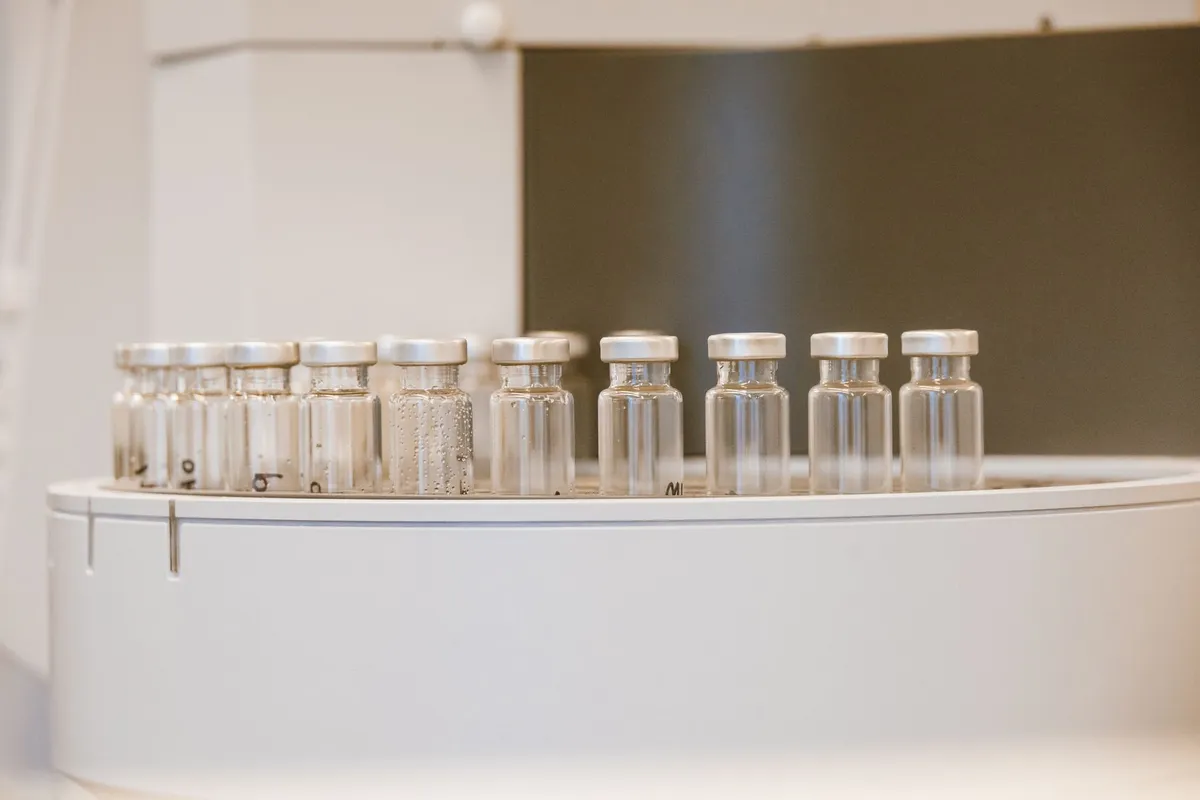
Micro- and nanoplastics are now recognized as inhalable contaminants that accumulate in the respiratory tract, and researchers are increasingly asking what they do once they get there. A 2026 study in the journal Toxicology took a careful step toward an answer by testing how polystyrene nanoplastics affect healthy lung cells differently from cancerous ones.[Toxicology, 2026]
The headline finding is counterintuitive. The same particles that damaged and killed lung cancer cells left normal lung cells largely alive — but made them move faster.[Toxicology, 2026] That split behavior is the kind of nuance that gets lost when nanoplastics are discussed as uniformly “toxic,” and it is worth understanding precisely.
What the researchers actually tested
The team exposed six human lung cell lines to red-fluorescent polystyrene nanoplastics of four sizes — 50, 100, 300, and 1000 nm — at concentrations of 20 to 80 µg/mL.[Toxicology, 2026] Two of those lines were non-malignant: IMR90 fibroblasts and BEAS-2B bronchial epithelial cells. The other four were lung cancer lines representing different subtypes, including A549 (adenocarcinoma), NCI-H727, NCI-H1755, and HCC1833.[Toxicology, 2026]
They chose particles below 1000 nm specifically to ensure the cells could take them up and to observe what happens inside, and they used concentrations typical of cytotoxicity studies.[Toxicology, 2026] The design lets the results speak to intracellular biology rather than to real-world airborne doses, a distinction that matters when interpreting them.
Note
Polystyrene is singled out in this literature for a reason: its aromatic benzene-ring structure is thought to make it more reactive and more toxic than less reactive plastics such as polyethylene and polypropylene.[Toxicology, 2026]
Uptake was not the difference
One of the cleanest results in the paper is a negative one. Using confocal fluorescence microscopy, the researchers confirmed that both IMR90 (normal) and A549 (cancer) cells efficiently internalized the nanoplastics, with clear cytoplasmic fluorescence in both.[Toxicology, 2026]
That rules out the simplest explanation for the divergent effects. If cancer cells simply swallowed more plastic, you would expect them to suffer more — but the study shows uptake was comparable.[Toxicology, 2026] The authors conclude that the differences must come from downstream cellular processing: how each cell type handles the particles once they are inside, not how many get in.[Toxicology, 2026]
Cancer cells were more vulnerable
Across the four cancer lines, particles of 100 nm and larger produced dose-dependent drops in viability that normal cells did not share.[Toxicology, 2026] A549 cells were the most sensitive of all, while IMR90 and BEAS-2B cells showed only marginal decreases under the same conditions.[Toxicology, 2026]
≥100 nm
The particle size threshold above which nanoplastics consistently reduced lung cancer cell viability; 50 nm particles caused no significant toxicity under the conditions tested
The researchers propose that cancer cells’ elevated metabolic activity, altered redox balance, and higher endocytic rates may make them more susceptible to nanoplastic-induced stress, while normal lung cells retain more robust homeostatic defenses.[Toxicology, 2026]
The redox clue: SOD1 suppression
To probe the mechanism, the team measured expression of two antioxidant enzymes — SOD1 and SOD2 — after 24 hours of exposure. SOD1 sits in the cytoplasm and neutralizes superoxide radicals to maintain redox balance.[Toxicology, 2026]
In the normal cells (IMR90 and BEAS-2B), SOD1 expression stayed largely unchanged. But in two cancer lines, A549 and HCC1833, SOD1 was significantly downregulated — and both were among the lines most sensitive to nanoplastic toxicity.[Toxicology, 2026] The interpretation is that cancer cells losing their antioxidant defense under nanoplastic stress tip into a redox imbalance that contributes to cell death, while normal cells hold the line.[Toxicology, 2026]
Caution
The authors are candid about a wrinkle here. A previous study using A549 cells reported increased SOD1 and SOD2 after nanoplastic treatment — the opposite direction.[Toxicology, 2026] They attribute the discrepancy to differences in particle size, concentration, and exposure time. It’s a reminder that in vitro nanoplastic results can swing on experimental parameters, and no single study should be read as the last word.
There is a further limitation the authors flag themselves: two cancer lines (NCI-H727 and NCI-H1755) showed toxicity without notable changes in SOD1 or SOD2, meaning oxidative stress is not the whole story.[Toxicology, 2026] Other pathways — mitochondrial dysfunction, inflammatory signaling, or impaired protein handling — may drive toxicity in those cells.[Toxicology, 2026]
The surprising part: normal cells moved faster
The most unexpected result came from a wound-healing assay, which measures how quickly cells migrate to close a scratch in a cell layer. Normal IMR90 fibroblasts showed a marked increase in migration after exposure to nanoplastics.[Toxicology, 2026] Significant enhancement of wound closure appeared at 24 hours with the 100, 300, and 1000 nm particles, and by 48 hours increased migration was evident across all sizes tested.[Toxicology, 2026]
The cancer cells did the opposite of what you might guess: A549 migration did not change significantly.[Toxicology, 2026] And because neither cell type showed meaningful proliferation differences at the tested dose, the faster wound closure reflects genuine migration rather than cells simply multiplying.[Toxicology, 2026]
The authors note this could point to nanoplastics nudging non-malignant cells toward the kind of behavior involved in wound repair or fibrotic remodeling — though they are explicit that the molecular pathways remain poorly understood and need further work.[Toxicology, 2026]
What this does — and does not — mean
It is easy to over-read a study like this. So here is the honest framing.
What the study shows is that in cell culture, polystyrene nanoplastics produce genuinely different effects depending on the physiological state of the cell, and that these effects can’t be explained by how much plastic gets in.[Toxicology, 2026] That’s a meaningful conceptual point: “nanoplastics are toxic” is too blunt a statement.
What it does not show is that inhaling nanoplastics causes cancer, cures it, or produces fibrosis in a living person. This was a controlled experiment on isolated human cell lines at defined doses, not an observation of disease in people. The authors frame their findings as raising concerns and identifying mechanisms worth investigating — not as clinical conclusions.[Toxicology, 2026] They also point out that airborne nanoplastics are increasingly detected in urban and indoor air, which is why the respiratory question matters, especially for people with pre-existing lung conditions.[Toxicology, 2026]
The practical takeaway
For a general reader, the actionable message is modest but real: the plastics we inhale don’t behave like inert dust once they reach lung cells, and reducing exposure to airborne and ingested plastics is a reasonable precaution while the science matures. This study strengthens the case for treating nanoplastic exposure as a systemic toxicological question rather than a settled one.[Toxicology, 2026]
The bigger scientific value here is the demand for nuance. Cell type governs outcome. Uptake is not destiny. And even well-designed studies disagree on mechanism depending on the exact particles and doses used — which is exactly why single findings should inform, not dictate, what you believe about plastics and health.[Toxicology, 2026]
Sources
- Toxicology, 2026 Polystyrene nanoplastics increase migration in normal lung cells while inducing differential cytotoxicity in lung cancer cells Read the source ↗
Frequently asked questions
- Do nanoplastics cause lung cancer?
- This study does not show that. It found that lung cancer cells were more easily killed by polystyrene nanoplastics than normal cells, and that normal lung cells migrated faster after exposure. These are cell-culture observations, not evidence that nanoplastics cause cancer in people.
- Did particle size matter in this study?
- Yes. Particles of 100 nm and larger reduced viability in a dose-dependent way in cancer cells, while 50 nm particles produced no significant toxicity under the conditions tested — which the authors attributed partly to the lower concentrations and short exposure time used.
More on The Science of Plastic
The Science of Plastic
Why Nanoplastics in Drinking Water Are So Hard to Measure
Nanoplastics have been found in tap and bottled water, but the numbers are hard to trust. The real problem is measurement science, not just contamination.

The Science of Plastic
How Many Microplastics Are in Bottled Water? A New Count
A 2026 study counted up to 12,080 microplastic particles per liter of bottled water and showed they can slip inside human cells. Here is what the numbers mean.

The Science of Plastic
What 240,000 Microplastics Per Liter Actually Means For Your Body
The bottled-water stat gets quoted constantly. Here's where those particles actually go once you swallow them, and what's still genuinely unknown.