The Science of Plastic
Microplastics in the Human Body: How They Get In and What They Do
A 2025 review traces micro- and nanoplastics from ingestion, inhalation, and skin into blood, lungs, and placenta. Here's what the evidence shows — and what it
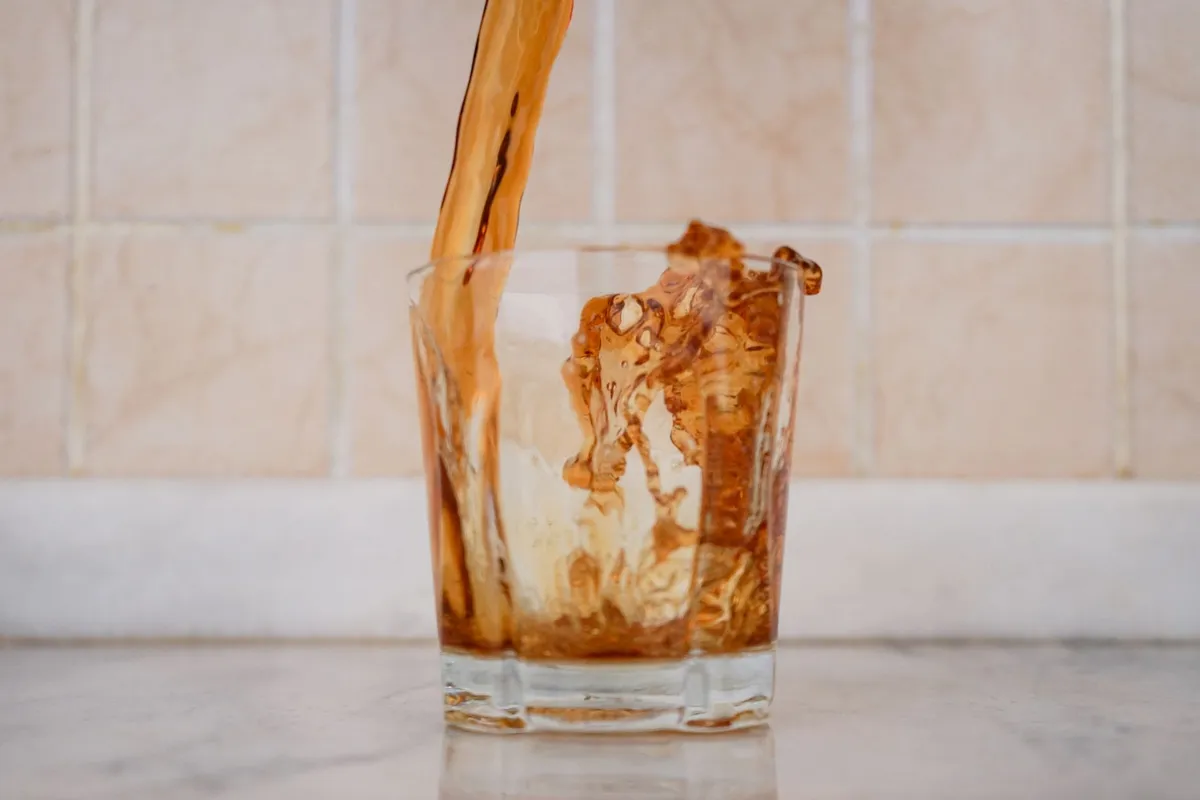
Micro- and nanoplastics are no longer just an environmental problem happening somewhere offshore. A 2025 systematic review in Toxicology Reports compiles the studies that have now detected these particles inside the human body — in blood, lung tissue, stool, placenta, kidney, liver, and more.[Toxicology Reports, 2025]
The same review lays out how the particles get in, what they appear to do at the cellular level, and — just as importantly — how much we still don’t know. This piece walks through its findings, including the honest limitations the authors themselves flag.
How plastics get into the body
The review identifies three primary exposure routes: ingestion, inhalation, and dermal contact.[Toxicology Reports, 2025]
Ingestion is described as the most documented route, primarily through contaminated food and water. The authors note that MNPs have been documented in bivalves, crustaceans and commercial fish, sugar, salt, honey, tea, and bottled water.[Toxicology Reports, 2025] Nanoplastics smaller than 100 nm are singled out as particularly concerning because of their ability to cross the intestinal barrier and enter systemic circulation.
Inhalation is the second major route. The review notes MNPs are present in both indoor and outdoor air, shedding from synthetic clothing and textiles, building materials, and plastic products.[Toxicology Reports, 2025] Because of their small size, nanoplastics can reach the alveoli deep in the lungs and potentially enter the bloodstream.
Dermal contact is the third. The review points to cosmetics, body washes, masks, sunscreens, and toothpaste as sources, and flags a less obvious one: the mechanical wear of implanted medical devices — polyethylene joint spacers in hip, knee, or shoulder replacements, dental implants, and cosmetic implants — which can generate particles directly inside the body.[Toxicology Reports, 2025]
10,000
microplastic particles per liter — the upper end reported for bottled water in a study cited by the review
Toxicology Reports, 2025
Where the particles end up
The review’s most striking contribution is a summary table of studies that identified MNPs in human biological samples. The list is long: blood, cerebrospinal fluid, lung tissue, lavage fluid, sputum, saliva, hair and skin, stool, urine, kidney tissue, placenta, meconium (a newborn’s first stool), breast milk, testis and semen, colon, thrombi (blood clots), liver, and spleen.[Toxicology Reports, 2025]
In one blood study cited, MNPs averaged 1.6 mg/mL of the total measurable concentration, with polyethylene terephthalate, polyethylene, and styrene polymers among the most common.[Toxicology Reports, 2025] A sputum study of 22 respiratory patients found particles in every sample, with 21 different chemical compositions and sizes ranging from 20 to 500 µm — polyurethane being the most frequent.[Toxicology Reports, 2025]
Polymer types varied by tissue. The review reports that in placenta studies all identified polypropylene; in meconium, PET was the most predominant; and in every breast milk study, polyethylene was the dominant polymer.[Toxicology Reports, 2025]
702
microparticles per liter found in a study of human body fluids including blood and cerebrospinal fluid
Toxicology Reports, 2025
What the particles do to cells
Across cell-culture and animal studies, the review identifies a consistent set of toxic mechanisms: oxidative stress, inflammation, apoptosis (programmed cell death), immune dysregulation, and even genotoxicity (DNA damage).[Toxicology Reports, 2025] The severity depends on particle size, shape, surface chemistry, and polymer type.
In lab studies using human epithelial, liver, neuronal, and immune cell lines, the review reports that smaller particles — especially those under 100 nm — cause greater oxidative stress and mitochondrial dysfunction than larger microplastics.[Toxicology Reports, 2025] Polystyrene nanoplastics, for example, increased reactive oxygen species, reduced cell viability, and promoted pro-inflammatory cytokine release in intestinal and bronchial cells.
Polymer identity matters too. The review states that PVC and PS particles generally show higher cytotoxicity than PET or PE at comparable doses, likely because of their associated additives and higher reactivity.[Toxicology Reports, 2025] Endocrine-disrupting additives such as phthalates and bisphenols are flagged as contributors to systemic toxicity, particularly in the endocrine and reproductive systems.
At the molecular level, the review notes that MNPs activate stress pathways including MAPK, NF-κB, and Nrf2, and that mitochondrial dysfunction and DNA fragmentation have been observed in several models.[Toxicology Reports, 2025]
The systems most affected
Animal work summarized in the review links orally administered MNPs to altered gut microbiota, hepatic inflammation, and lipid metabolism disorders, with accumulation in the liver, kidneys, and even brain.[Toxicology Reports, 2025] Inhaled microfibers have been associated with pulmonary inflammation and fibrosis-like pathology.
For the nervous system, the review reports that microplastics can cross biological barriers including the blood-brain barrier, and that once in the brain they may induce oxidative stress and neuroinflammation — raising concerns about a possible link to neurodegenerative disease. But the authors are careful here: human studies remain limited, and they state plainly that neurotoxic risk assessment requires in-depth investigation.[Toxicology Reports, 2025]
On reproduction and pregnancy, the review notes that microplastics found in placentas have been associated with oxidative stress, cell death, and inflammatory responses, and cites studies reporting an inverse relationship between placental MNP levels and infant weight and height.[Toxicology Reports, 2025]
The part most coverage skips: how weak the human evidence still is
This is where the review is most useful, and where it diverges from breathless headlines.
Caution
The authors state that most existing MNP toxicity research has been conducted in environmental contexts, non-mammalian models, and in vitro systems. While it is documented that MNPs accumulate in human tissues, they write that relatively little research has been conducted on the damage they actually cause — and that information on exposure dose, duration, and influencing variables remains scarce.[Toxicology Reports, 2025]
Several caveats deserve emphasis. Many of the human detection studies involve very small sample sizes; the review explicitly calls for larger, more demographically diverse studies. Many cell-culture experiments used concentrations far higher than realistic human dietary exposure — the review notes one study found cytotoxic effects only “when exposed to concentrations much higher than the actual human diet.”[Toxicology Reports, 2025]
Measuring these particles in human tissue is also genuinely hard. The review lists the analytical obstacles: ultra-low concentrations below detection limits, interference from complex biological matrices, high contamination risk from plastic labware and airborne particles, and — critically — no universally accepted standard protocol for sample collection and analysis. That lack of standardization makes comparing results across studies difficult.[Toxicology Reports, 2025]
In short: the presence of plastics in human tissue is well established. A direct, dose-linked chain to specific human diseases is not yet proven. Both things are true at once.
What the review suggests you can actually do
The review devotes a full section to mitigation, split between reducing exposure and reducing toxicity in the body.
For reducing intake, the practical suggestions are concrete: replace plastic food containers with glass, stainless steel, or ceramic — materials the authors note do not degrade or leach microplastic particles into food.[Toxicology Reports, 2025] They also recommend cutting processed and packaged foods, avoiding plastic utensils and kitchenware (especially when heating food), and using metal or paper straws.
For air, the review points to HEPA air purifiers to capture fine particles and choosing natural fibers like cotton, wool, or hemp over polyester and acrylic, which shed microfibers during wear and washing.[Toxicology Reports, 2025]
For water and food supply, it highlights filtration technologies — membrane filtration such as nanofiltration and reverse osmosis, plus activated carbon filters and ultrafiltration membranes — as effective at reducing microplastic concentrations.[Toxicology Reports, 2025]
Note
The review also discusses nutritional strategies — high-fiber diets, antioxidants like polyphenols and omega-3s, adequate hydration to support renal filtration, and bioactive compounds such as melatonin, astaxanthin, and probiotics. These showed protective effects in animal and cell studies, but the authors repeatedly caution that the mechanisms are not yet well understood and that further research is needed before any of it can be treated as established human guidance.[Toxicology Reports, 2025]
The honest bottom line
Micro- and nanoplastics are now measurably inside human bodies, and in the lab they do measurable damage. The strongest, most defensible move the evidence supports is reducing your exposure where it’s cheap and easy to do so — filtered water, fewer plastic containers, natural fibers — while treating claims about specific disease outcomes as still-open questions. As the review’s own conclusion puts it, further research is essential to fully understand the health impacts and to develop effective strategies to mitigate these risks.[Toxicology Reports, 2025]
Sources
- Toxicology Reports, 2025 Micro- and nanoplastic toxicity in humans: Exposure pathways, cellular effects, and mitigation strategies Read the source ↗
Frequently asked questions
- How do microplastics get into the human body?
- According to a 2025 review in Toxicology Reports, the three main routes are ingestion (food and water), inhalation (indoor and outdoor air), and dermal contact. Ingestion is the most documented route.
- Have microplastics actually been found in human organs?
- Yes. The review summarizes studies detecting micro- and nanoplastics in human blood, lung tissue, sputum, saliva, stool, placenta, kidney, liver, spleen, testis and semen, and thrombi.
- Can diet or hydration reduce microplastic harm?
- The review discusses early evidence that high-fiber diets, antioxidants, and adequate hydration may help, but stresses that these effects are not yet well understood and need more research.
More on The Science of Plastic
The Science of Plastic
Why Nanoplastics in Drinking Water Are So Hard to Measure
Nanoplastics have been found in tap and bottled water, but the numbers are hard to trust. The real problem is measurement science, not just contamination.

The Science of Plastic
How Many Microplastics Are in Bottled Water? A New Count
A 2026 study counted up to 12,080 microplastic particles per liter of bottled water and showed they can slip inside human cells. Here is what the numbers mean.

The Science of Plastic
What 240,000 Microplastics Per Liter Actually Means For Your Body
The bottled-water stat gets quoted constantly. Here's where those particles actually go once you swallow them, and what's still genuinely unknown.