The Science of Plastic
Microplastics Are Rewiring Your Gut Microbiome
A 2026 Gut Microbes review maps how microplastics reshape human gut bacteria—cutting butyrate producers and boosting pathobionts. Here's what the evidence shows.
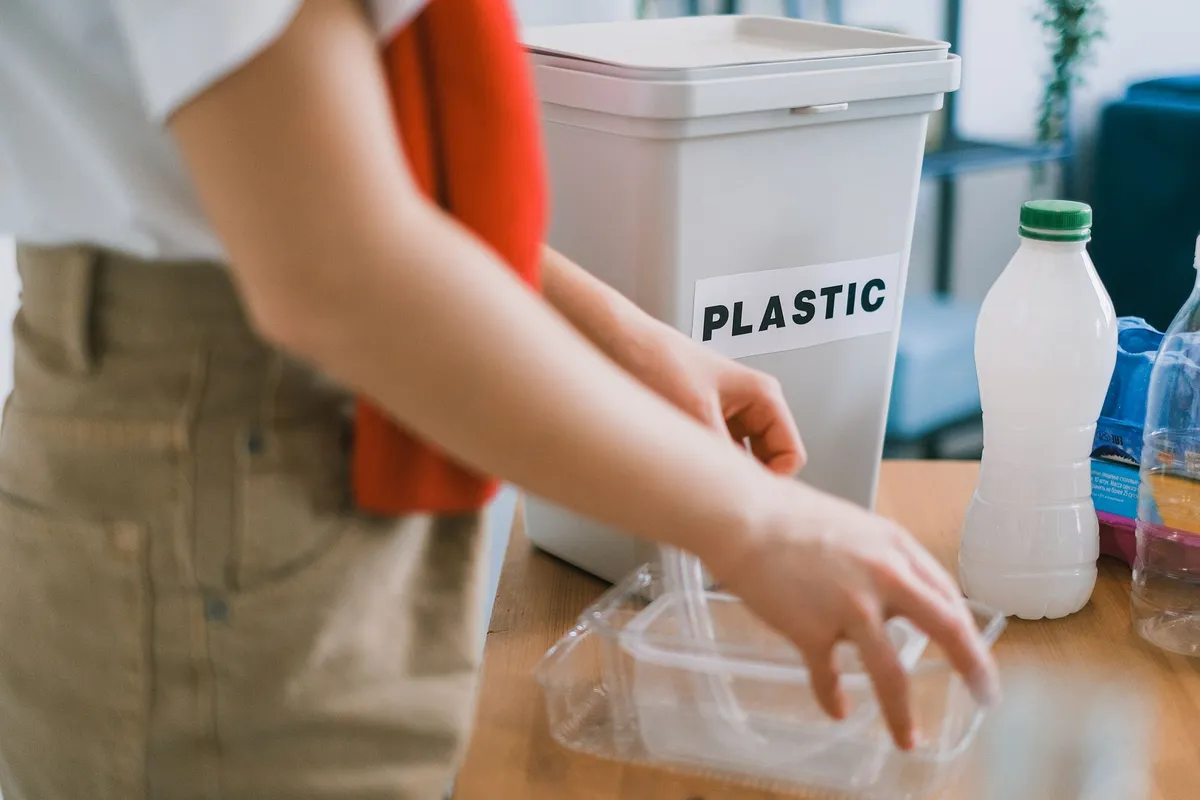
Microplastics have been found in human blood, liver, kidney, and placenta—evidence that these particles travel throughout the body.[Gut Microbes, 2026] A 2026 review in Gut Microbes asks a narrower question with real consequences: once microplastics reach the gut, do they reshape the community of bacteria living there?
The short answer from the human evidence is yes—but with heavy caveats. Most of what we know about microplastics and gut bacteria comes from animal models, and the review’s central argument is that those models may not tell us much about people. When researchers focus only on human studies, a more cautious and more interesting picture emerges.
Why human data looks different from animal data
The gap between animal experiments and human reality is the review’s recurring theme. In animal models, microplastics are usually dosed at high concentrations over short periods, and the particles are typically smaller than 5 μm and spherical.[Gut Microbes, 2026] That setup is convenient for measuring rapid toxicity, but it does not mirror how humans encounter plastic.
Microplastics found in human tissue are usually larger than 50 μm and take the form of fibers, fragments, and films with rough surfaces—shapes that may not cross the intestinal barrier as easily as small, regular particles.[Gut Microbes, 2026] Real-world exposure is also chronic and low-level rather than acute, and involves mixtures of polymers—polyvinyl chloride, polypropylene, polyethylene terephthalate—rather than a single plastic type.[Gut Microbes, 2026]
Key takeaway
The review concludes that data from acute, high-dose animal exposure “may overstate the chronically toxic effects of MPs on humans.” This is a rare note of restraint in a field prone to alarming headlines.
The bacteria that increase with exposure
Several human and human-derived studies converge on a set of bacterial groups that rise with microplastic exposure. In an infant gut model seeded with fecal samples from four donors, polyethylene microplastics increased the abundance of Dethiosulfovibrionaceae, Enterobacteriaceae, and Moraxellaceae.[Gut Microbes, 2026] That matters because Enterobacteriaceae contains well-known enteric pathogens such as Salmonella, Escherichia, and Shigella, and Dethiosulfovibrionaceae has been correlated with colorectal cancer.[Gut Microbes, 2026]
In people who consumed hot foods served in disposable plastic tableware, gut communities showed higher abundance of the phyla Pseudomonadota and Actinomycetota.[Gut Microbes, 2026] Both phyla include steroid-degrading bacteria, and the review notes a possible chain linking them to lower estrogen levels and, in turn, to depression—though this is a proposed association, not a demonstrated causal pathway.[Gut Microbes, 2026]
Among young adults who frequently ate take-out food, higher microplastic exposure was tied to increased Veillonella, a genus found at higher levels in overweight people.[Gut Microbes, 2026]
The bacteria that decline—and why butyrate is the through-line
The more consistent signal in the human data is what disappears. Microplastic exposure was associated with declines in Lactobacillales, Rikenellaceae, Parabacteroides, and Eubacterium coprostanoligenes in preschool children, and those declines tracked with lower butyrate production and reduced short-chain fatty acid levels.[Gut Microbes, 2026]
Butyrate is the connective tissue running through nearly every finding in this review. It is a short-chain fatty acid that feeds the cells lining the colon and helps maintain the intestinal barrier. Exposure also reduced Bacillota, Bacteroidota, and Roseburia—the last of which produces butyrate in the colon and is depleted in inflammatory bowel disease patients.[Gut Microbes, 2026] Coprococcus and Turicibacter, both beneficial, also fell under exposure; Coprococcus is an important butyric acid producer, and Turicibacter helps regulate lipid and sugar metabolism.[Gut Microbes, 2026]
9+
Beneficial bacterial groups reduced under microplastic exposure in human studies
The pattern is coherent: fewer butyrate producers, less butyrate, and a weaker gut barrier. The review frames this as a potential vicious cycle, in which microplastic-driven inflammation and dysbiosis reinforce each other and perpetuate impaired barrier integrity.[Gut Microbes, 2026]
How microplastics may do it: biofilms and the “Trojan horse”
The review’s proposed mechanisms center on the surface of the plastic itself. In biological fluids, microplastics attract proteins and other biomolecules that form a nutrient-rich “protein corona,” which promotes bacterial attachment and biofilm formation.[Gut Microbes, 2026] Once a biofilm develops, the plastic surface can act as a raft that carries opportunistic pathogens—the review cites Vibrio species and Escherichia coli as examples—and even as a hotspot for horizontal gene transfer of antibiotic resistance genes among microbes.[Gut Microbes, 2026]
Microplastics can also act as carriers—a “Trojan horse”—for co-pollutants including persistent organic pollutants, heavy metals, antibiotics, and pathogens.[Gut Microbes, 2026] Separately, the review describes how microplastics can damage the intestinal barrier directly, by triggering reactive oxygen species that drive epithelial cell death and down-regulate tight junction proteins such as ZO-1, occludin, and claudin-1—though much of this mechanistic detail comes from mouse studies.[Gut Microbes, 2026]
Note
An open question the authors raise: if probiotics bind to microplastics, could they unintentionally promote uptake of the toxicants or pathogens stuck to the plastic’s surface? The protective role of probiotics is real, but this potential dual effect isn’t yet resolved.
The honest part: the evidence contradicts itself
What makes this review credible is that it refuses to smooth over its own inconsistencies. For several bacteria, the direction of the microplastic effect flips depending on the study.
Faecalibacterium is the clearest example. Most studies in adults found it negatively correlated with microplastics, but in preschool children it increased with exposure.[Gut Microbes, 2026] The authors link this to host age: Faecalibacterium prausnitzii is typically reduced in adult Crohn’s disease but elevated in pediatric Crohn’s disease, suggesting the bacterium may play different roles at different life stages.[Gut Microbes, 2026]
Similar contradictions appear for Alistipes—which increased in young fatty liver patients but decreased in preschool children exposed to microplastics—and for Lachnospiraceae, where one genus tracked negatively with exposure while another (Dorea) rose with takeaway food consumption.[Gut Microbes, 2026] The review attributes these discrepancies to differences in host age and diet, and to the fact that different food containers release different types, sizes, and shapes of plastic.[Gut Microbes, 2026]
Caution
A recurring problem is that the strongest exposure routes—hot food in disposable plastic tableware and take-out in plastic containers—are also independently linked to dysbiosis. That makes it genuinely hard to isolate the plastic’s effect from the food and lifestyle that come with it.
What the disease links do and don’t show
The review connects microplastic-associated dysbiosis to obesity, gastrointestinal dysfunction, inflammatory bowel disease, and certain cancers—but the strength of each link varies. In college students aged 18–30, the high-exposure group had significantly higher body fat percentage, visceral fat area, and BMI than the low-exposure group.[Gut Microbes, 2026] A separate study found that people eating takeaway food from disposable plastic containers had a higher prevalence of gastrointestinal dysfunction and cough.[Gut Microbes, 2026]
On cancer, the authors are careful. Microplastics have been detected in a majority of pancreatic tumors and in gastric, lung, colorectal, and cervical tumors, and in tumoral tissue of colorectal cancer patients.[Gut Microbes, 2026] But they explicitly note that these cancer associations may not run through gut bacteria at all—tumor and normal tissue simply have different affinities for microplastics, and one study found the particles bind selectively to a receptor called TIM-4.[Gut Microbes, 2026] In other words, the plastic-cancer correlation and the plastic-microbiome story may be two separate phenomena.
The limitations the authors won’t let you skip
Three methodological problems constrain this entire field, and the review lays them out plainly. First, exposure is hard to measure: human studies often infer it indirectly from food packaging or environmental data rather than measuring an internal dose, and there is still no standardized, sensitive, cost-effective way to quantify microplastics in human tissue and feces.[Gut Microbes, 2026]
Second, most studies rely on 16S rRNA gene sequencing, which profiles bacteria only to the genus level and infers function indirectly—likely obscuring the species- and strain-level shifts that matter most.[Gut Microbes, 2026] The authors recommend shotgun metagenomic sequencing instead.
Third, confounders like diet, medication, and lifestyle are difficult to untangle. Proton pump inhibitors and antibiotics drastically remodel the gut microbiota, and their effects could be misattributed to microplastics.[Gut Microbes, 2026]
The practical takeaway
The science here supports concern and further study—not panic, and not sweeping health claims. The human evidence is consistent on one point: exposure routes tied to disposable plastic tableware, plastic take-out containers, and plastic infant feeding bottles show up repeatedly as sources.[Gut Microbes, 2026] The review also emphasizes that children appear more sensitive to microplastics than adults, which raises the stakes for infant feeding in particular.[Gut Microbes, 2026]
If you want to act on the current evidence, the most defensible move is reducing exposure from the routes the human studies actually flag—especially hot food and drink in contact with disposable plastic. That is a low-cost precaution supported by the pattern in the data, even as researchers work to establish whether microplastics cause the microbiome changes they’re associated with.
Sources
- Gut Microbes, 2026 Gut microbiome remodeling induced by microplastic exposure in humans Read the source ↗
Frequently asked questions
- Do microplastics actually change the human gut microbiome?
- Human evidence is still limited, but cross-sectional studies reviewed in Gut Microbes (2026) link higher microplastic exposure to shifts in specific bacterial groups—including fewer butyrate producers and more potential pathogens. The associations are real, but causation in humans is not yet established.
- What is the main source of microplastic exposure in these studies?
- The reviewed human studies point to hot foods served in disposable plastic tableware, take-out food in plastic containers, and—for infants—formula and breastmilk in plastic bottles as notable exposure routes.
- Why do animal studies and human studies sometimes disagree?
- Animal experiments typically use high doses of small, uniform plastic particles over short periods, while humans face chronic, low-level exposure to mixed particle types, sizes, and shapes. The review argues animal data may overstate the toxic effects seen in people.
More on The Science of Plastic
The Science of Plastic
Why Nanoplastics in Drinking Water Are So Hard to Measure
Nanoplastics have been found in tap and bottled water, but the numbers are hard to trust. The real problem is measurement science, not just contamination.

The Science of Plastic
How Many Microplastics Are in Bottled Water? A New Count
A 2026 study counted up to 12,080 microplastic particles per liter of bottled water and showed they can slip inside human cells. Here is what the numbers mean.

The Science of Plastic
What 240,000 Microplastics Per Liter Actually Means For Your Body
The bottled-water stat gets quoted constantly. Here's where those particles actually go once you swallow them, and what's still genuinely unknown.