The Science of Plastic
How Microplastics Reach Your Body: Ingestion, Air, and Skin
Microplastics have moved from the ocean into the human diet. Here's what one 2023 review found about how they reach us and what they may do once inside.
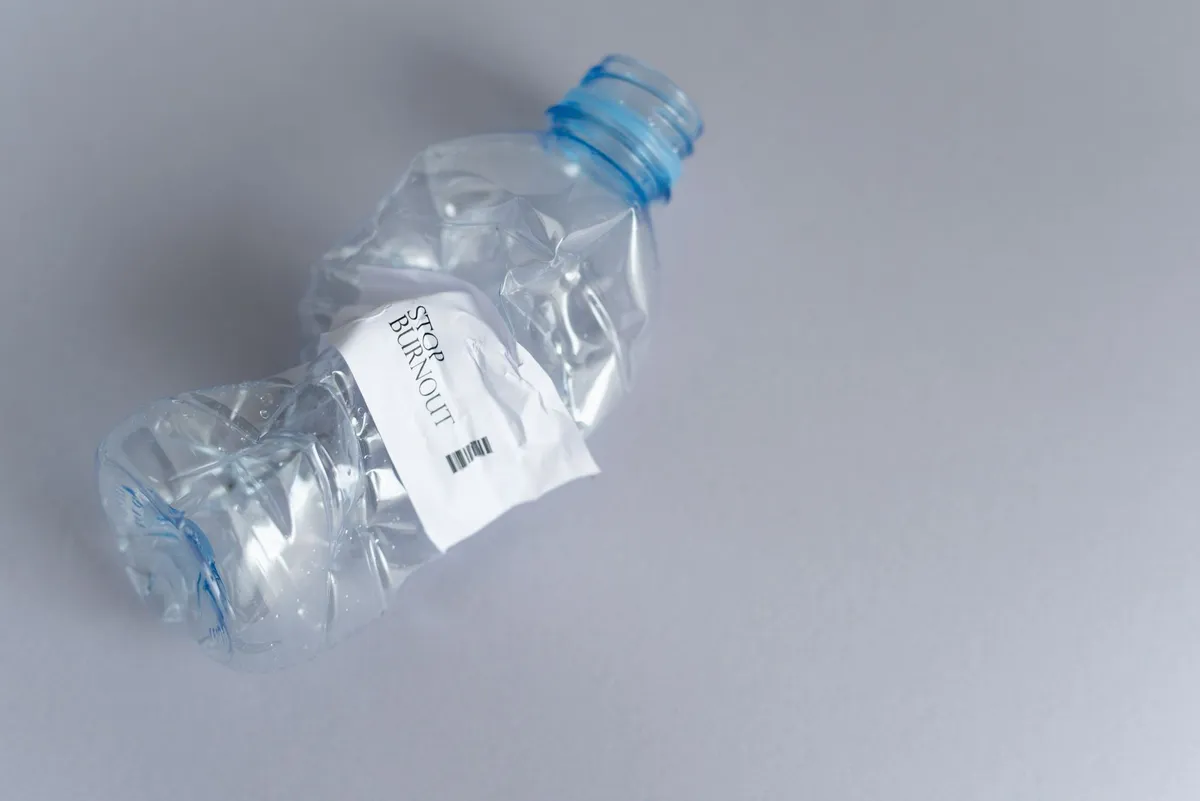
Microplastics were once seen as a problem only for marine life. That framing is out of date. A 2023 review in Heliyon describes how these particles — plastic fragments under 5 mm in diameter — now turn up in soil, water, air, and the human diet, and have been detected in human stool, saliva, and even placenta.[Heliyon, 2023]
The honest headline is that the science is still unsettled. The same review is careful to say the precise health consequences for humans “are still not entirely comprehended.”[Heliyon, 2023] What follows is what the evidence does support — and where it stops.
Where the particles come from
The review distinguishes two categories. Primary microplastics are made small on purpose — microbeads in scrubs and toothpaste, resin pellets, microfibers. Secondary microplastics form when larger plastic items weather and fragment under sunlight, abrasion, and chemical stress. The review notes the prevailing belief is that most environmental microplastics are secondary, simply because so many large plastics are released into the environment.[Heliyon, 2023]
Everyday sources add up. Washing synthetic clothing sheds large numbers of microfibers; the review cites figures of up to 1,900 to 1,000,000 fibers released from a single garment wash, with polyester fabrics shedding more than 6,000,000.[Heliyon, 2023] Personal care products contribute too — the review notes that toothpaste alone may release roughly 4,000 microbeads per use.[Heliyon, 2023]
Wastewater treatment plants were designed to strip out organic matter and nutrients, not microplastics, so they can become a conduit rather than a filter. The review cites one plant on the River Clyde in Glasgow estimated to discharge around 65 million microplastic particles into surrounding water every day.[Heliyon, 2023]
Route one: ingestion
Ingestion is the best-documented exposure path, and seafood is a major reason. Filter-feeding shellfish accumulate particles from the water column. The review cites a study finding plastic debris in 28% of individual fish and 55% of species sampled in Indonesia, and 25% of individual fish and 67% of species in the United States.[Heliyon, 2023]
Bottled water is another well-studied source. The review cites an analysis of 259 bottles across 11 brands in nine countries in which 93% showed microplastic contamination.[Heliyon, 2023]
93%
of bottled water samples tested across 11 brands and 9 countries showed microplastic contamination
Contamination is not limited to water and seafood. The review summarizes studies detecting microplastics in beer, honey, tea, sugar, and table salt, with table salt concentrations in one Spanish study ranging from 50 to 280 microplastics per kilogram.[Heliyon, 2023] The breadth is the point: these particles show up across ordinary foods, suggesting broad environmental contamination even where concentrations are small.
Route two: inhalation
Airborne microplastics can be breathed in directly, a route the review calls a critical concern. Particle size governs whether fibers reach the lungs: the review notes that plastic particles under 5 μm long and under 3 μm in diameter have the potential to be inhaled, and that fibers of 15–20 μm cannot be effectively cleared by the lungs’ natural mechanisms.[Heliyon, 2023]
Indoor air matters more than you might expect. A study cited from Shanghai measured an average of 43 ± 16 microplastic items per cubic meter in indoor aerosol, and detected microplastics in every sample analyzed.[Heliyon, 2023] Occupational exposure is an older, harder line of evidence: the review points to synthetic textile and “flock” workers who developed interstitial lung disease and declining lung function.[Heliyon, 2023]
Perhaps the most direct human finding: a study the review cites examined 20 lung tissue samples taken during autopsies and detected polymeric particles or fibers in 13 of them.[Heliyon, 2023]
Route three: dermal contact
Skin is the least-explored and, on current evidence, the least alarming route. The review reports that absorption through skin is considered low, because particles must cross the stratum corneum, which generally only lets through particles smaller than 100 nm.[Heliyon, 2023] That leaves a door open for nanoplastics — even smaller particles — which the review says should not be dismissed.[Heliyon, 2023]
What microplastics may do once inside
Here the review is at its most cautious, and readers should be too. The reported or suspected effects include gastrointestinal disturbance, endocrine disruption, inflammation, oxidative stress, and the potential for microplastics to ferry pathogenic bacteria.[Heliyon, 2023]
On the gut, the review cites human intestinal-cell work showing both 3 μm and 10 μm particles caused moderate cytotoxicity, with smaller particles affecting cell membranes more.[Heliyon, 2023] On hormones, it notes microplastics can carry endocrine-disrupting compounds such as bisphenol A and phthalate esters, which may be released once ingested.[Heliyon, 2023] On microbes, it describes the “plastisphere” — biofilms on plastic surfaces that can host human and fish pathogens, including antibiotic-resistant bacteria.[Heliyon, 2023]
Caution
A large share of the health evidence comes from animal models — zebrafish, mice, rats — and from cell-culture studies, not from tracking health outcomes in people. The review itself notes that whether these pollutants “present a significant danger to human health remains unclear.” Read the mechanisms as warning signs that justify more research, not as settled human harm.
The counterpoint the headlines skip
It is easy to turn “microplastics are everywhere” into “microplastics are poisoning us.” The review does not support that leap, and it’s worth being precise about where it holds back.
Two examples from the cardiovascular section make the tension clear. The review cites rat and mouse studies linking polystyrene microplastics to cardiac fibrosis, oxidative stress, and metabolic changes.[Heliyon, 2023] But it also cites a study on human vascular endothelial cells finding that, at realistic blood concentrations, the risk of developing atherosclerosis “was not significantly increased,” suggesting a low cardiovascular risk from that exposure in humans.[Heliyon, 2023]
On skin, a toxicity study in rats found that chronic exposure to polypropylene microplastics did not cause eye or skin irritation — though the review declines to rule the possibility out entirely.[Heliyon, 2023] Honest uncertainty running in both directions is a feature of the current evidence, not a weakness of this article.
What the review actually calls for
The review’s “way forward” is about closing knowledge gaps, not issuing guarantees. It calls for a better understanding of how microplastics cross the epithelial barriers of the gut, lungs, and skin, and for longitudinal studies that follow exposed people over time.[Heliyon, 2023] It also points to policy efforts such as the OSPAR and HELCOM conventions and argues public awareness can drive responsible consumption and better waste management.[Heliyon, 2023]
For a reader, the practical takeaway is modest and defensible. The exposure routes the review describes — contaminated food and water, indoor air, and personal care products — are the places where reducing plastic contact is most plausible. The review flags bottled water and single-use plastics as documented sources of ingested particles.[Heliyon, 2023] Reducing reliance on them is a reasonable, low-cost response to an evolving body of evidence — not a cure for a proven disease.
Sources
- Heliyon, 2023 From oceans to dinner plates: The impact of microplastics on human health Read the source ↗
Frequently asked questions
- How many microplastic particles do people consume each year?
- One estimate cited in a 2023 Heliyon review puts annual intake at roughly 39,000 to 52,000 particles from food, rising to 74,000 to 121,000 when inhalation is included. These are estimates, not precise measurements.
- Does bottled water contain more microplastics than tap water?
- The review reports microplastics in most bottled water tested across multiple studies, with counts varying widely by brand and bottle type. Tap water also contributes to intake. The exact comparison depends heavily on the study and methods used.
- Can microplastics pass through your skin?
- According to the review, skin absorption is considered low because particles must cross the stratum corneum, which generally only passes particles smaller than 100 nanometers. Smaller nanoplastics cannot be ruled out.
More on The Science of Plastic
The Science of Plastic
Why Nanoplastics in Drinking Water Are So Hard to Measure
Nanoplastics have been found in tap and bottled water, but the numbers are hard to trust. The real problem is measurement science, not just contamination.

The Science of Plastic
How Many Microplastics Are in Bottled Water? A New Count
A 2026 study counted up to 12,080 microplastic particles per liter of bottled water and showed they can slip inside human cells. Here is what the numbers mean.

The Science of Plastic
What 240,000 Microplastics Per Liter Actually Means For Your Body
The bottled-water stat gets quoted constantly. Here's where those particles actually go once you swallow them, and what's still genuinely unknown.